


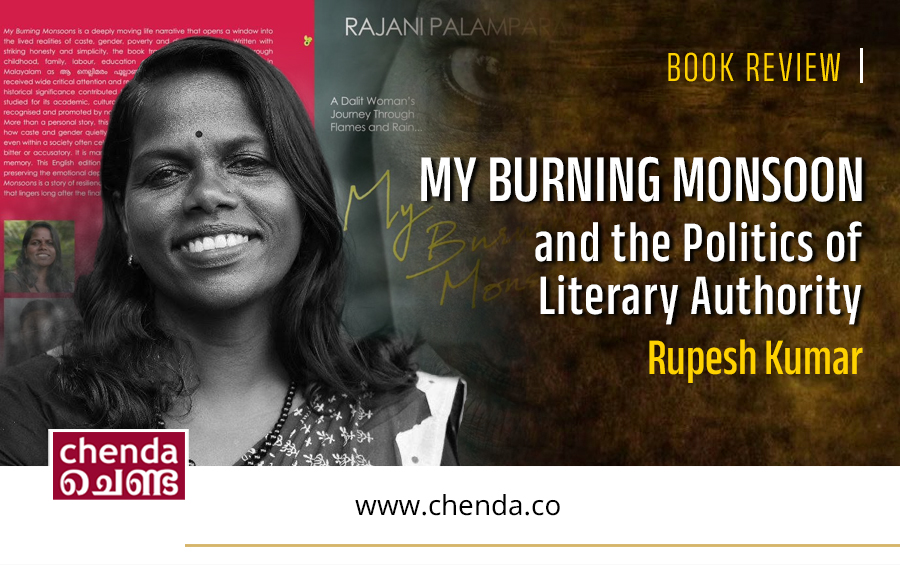
Who has the right to write an Autobiography?
The question appears deceptively simple, yet it unsettles one of literature’s oldest assumptions. Autobiography has long been regarded as the privilege of those who have already secured a place in public history—political leaders, social reformers, celebrated writers, historians, or intellectuals whose lives have been certified as historically significant. Rarely has it functioned as a genuinely democratic literary form. Before a life could become literature, it first had to become institutionally visible.
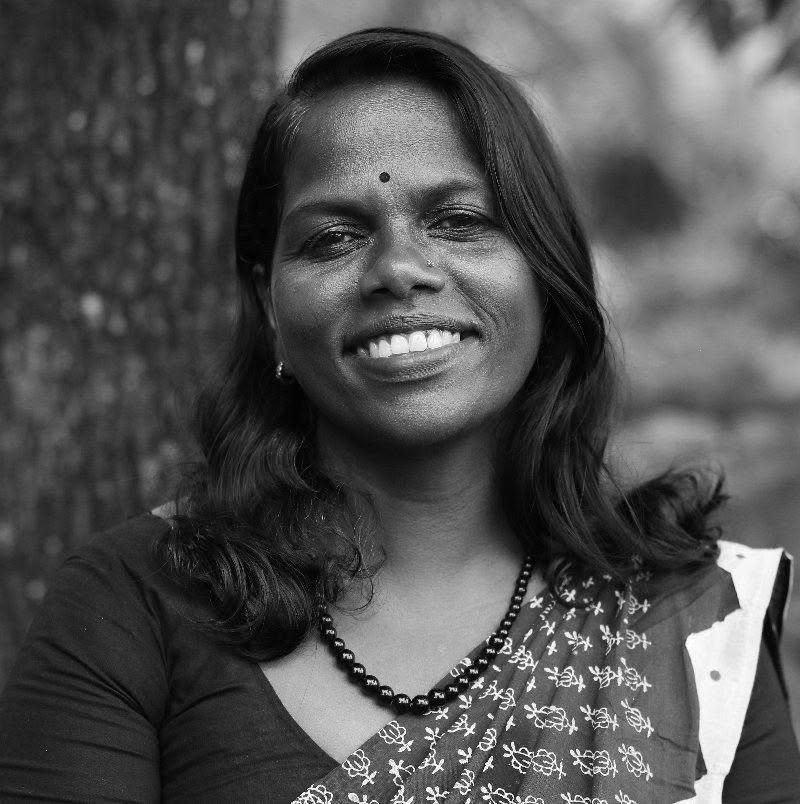
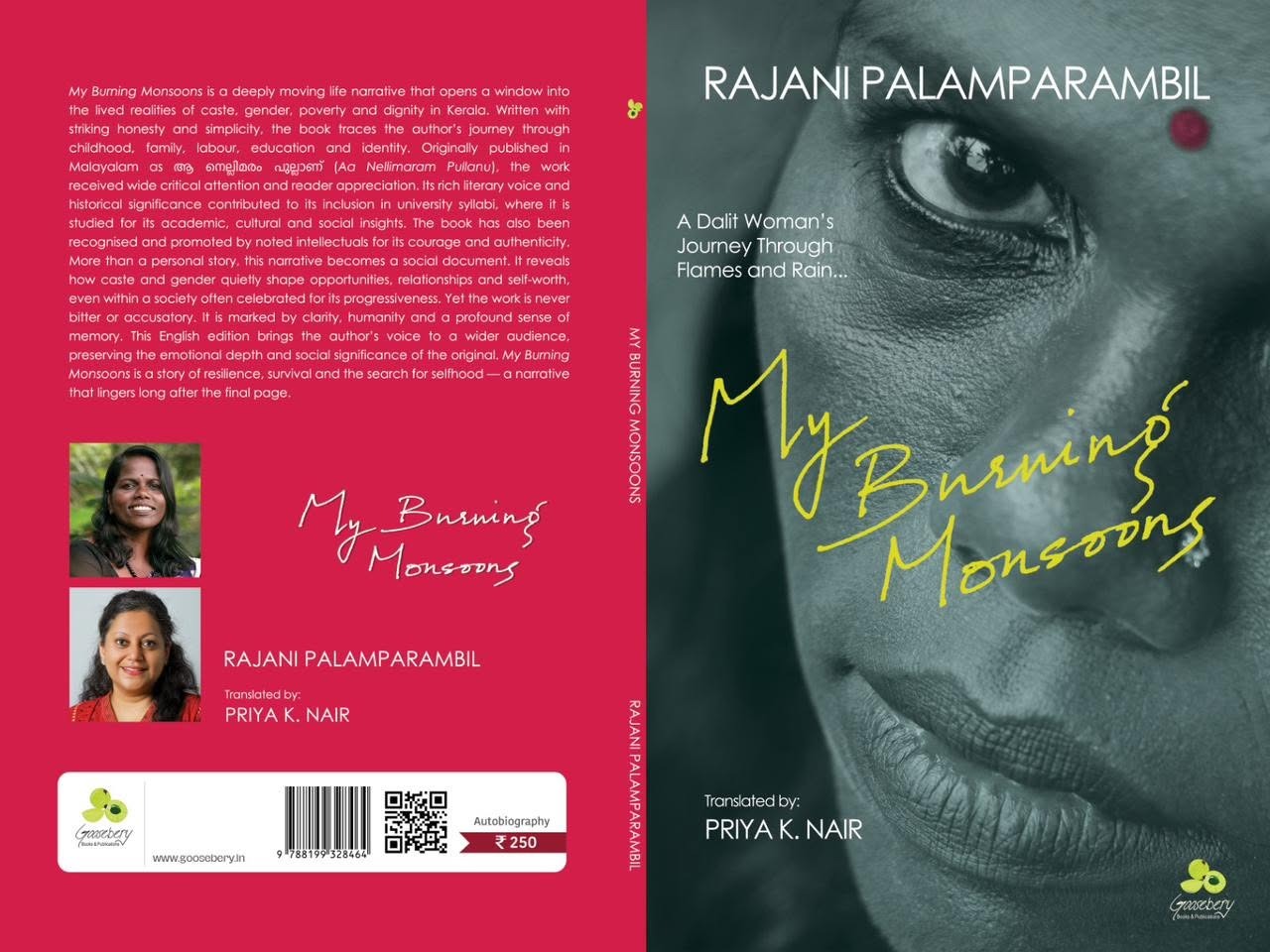
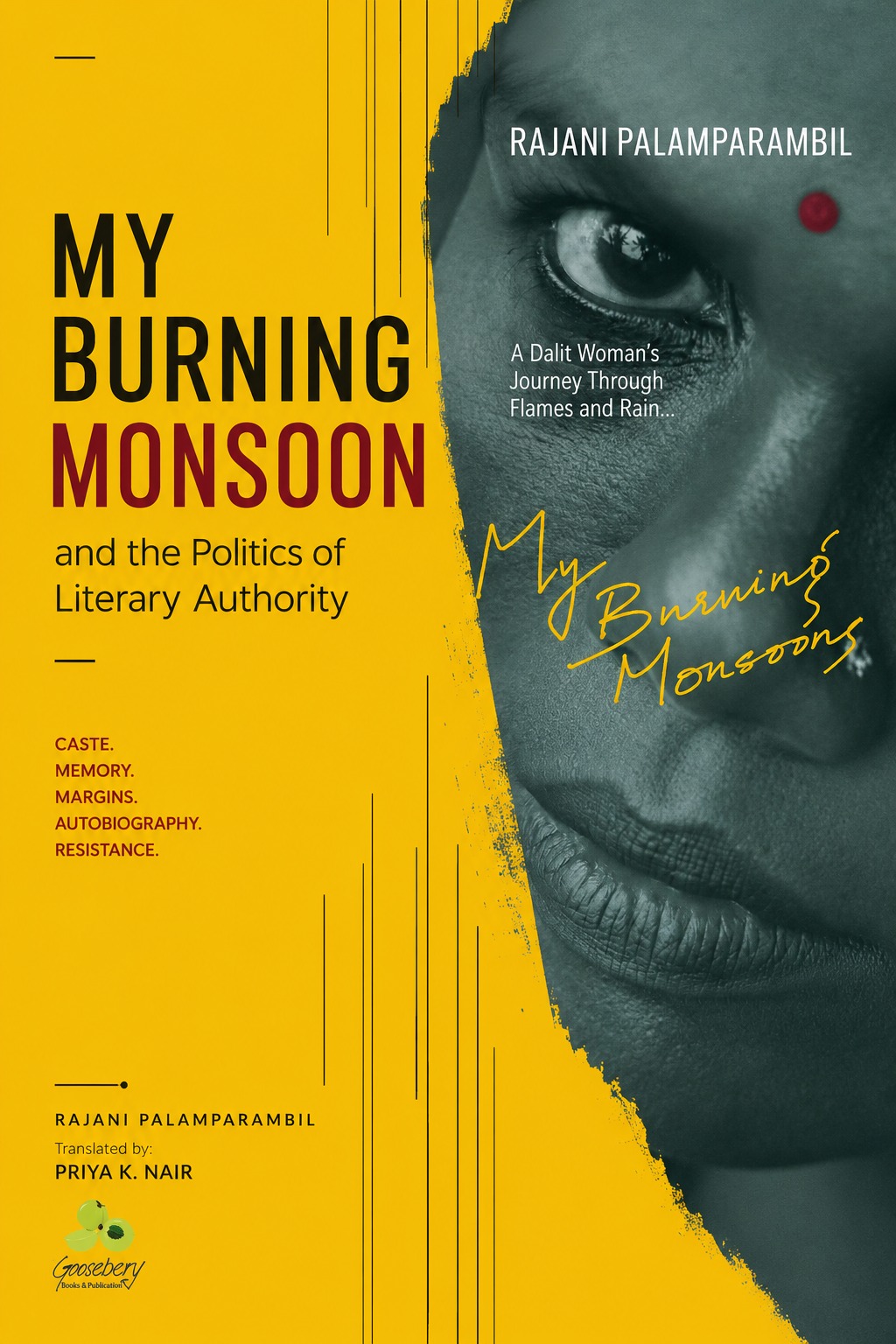
Rajani Palamparambil’s My Burning Monsoon, the English translation of her Malayalam autobiography, offers a profound challenge to this inherited logic. It invites us to rethink autobiography not merely as the narration of a life but as a political struggle over who possesses the authority to remember, to narrate, and ultimately to become literature. In doing so, the book transforms a deeply personal narrative into a radical intervention in the politics of memory, caste, and literary legitimacy.
This reveals one of the enduring paradoxes of autobiographical writing. Even those who dedicate their lives to resisting dominant social structures are often required to be recognized by those very structures before their experiences are considered worthy of narration. Revolutionaries become autobiographers only after history acknowledges them as revolutionaries. The institution they challenge eventually becomes the institution that certifies their lives.
The history of autobiography, therefore, is also the history of institutional validation. Behind every published autobiography stand the intertwined authorities of publishers, editors, literary markets, cultural prestige, and educational institutions. Together they determine whose memories deserve preservation and whose lives remain outside the archive. Long before the first sentence is written, the author must first pass through invisible systems of cultural authentication.
The life of Kallen Pokkudan illustrates this paradox with remarkable clarity. When he began restoring Kerala’s mangrove forests, he was often dismissed as eccentric or irrational. Only decades later, after his ecological work earned national and international recognition, did his life become culturally acceptable as autobiography. Yet even then another question emerged with unsettling force: Can a Pulayan have an autobiography? The question itself exposes how caste has historically regulated literary legitimacy. Pokkudan belonged to perhaps the last generation whose autobiographical authority still depended almost entirely upon institutional recognition before the expansion of digital media fundamentally altered the landscape of self-representation.
The digital revolution disrupted this grammar of legitimacy.
With the spread of blogs, Orkut, Facebook, and later other social media platforms, autobiographical expression escaped, at least partially, the monopoly of publishers and literary gatekeepers. Ordinary people no longer required institutional permission to narrate fragments of their lives. Dalits, Adivasis, women, queer communities, migrant workers, and countless others who had remained invisible within mainstream literary culture began documenting everyday experiences of labour, hunger, caste, migration, family, sexuality, violence, and survival.
This transformation was neither complete nor uncomplicated. Digital platforms created new hierarchies governed by algorithms, visibility, performance, and attention economies. They produced fresh forms of exclusion even as they dismantled older ones. Yet despite these new structures, they fundamentally weakened the exclusive authority once exercised by literary institutions over autobiographical expression. Lived experience increasingly acquired its own legitimacy, independent of traditional publishing.
Autobiography itself began to change. The carefully curated narrative of the historically celebrated individual gave way to fragmented, immediate, and often unfinished acts of self-writing. Memory became decentralized. The archive expanded beyond libraries and publishing houses into countless personal acts of narration. The authority of print encountered the authority of experience.
It is within this broader historical transformation that Rajani Palamparambil’s autobiographical essay, The Gooseberry Tree is Grass, first appeared in the online magazine Onnippu. Rajani was not a public intellectual, political leader, established activist, or literary celebrity. She taught in a parallel college, raised two children, held postgraduate degrees, and lived what society would comfortably describe as an ordinary life. By conventional literary standards, she possessed none of the symbolic capital that traditionally authorized autobiography.
Yet one essay quietly altered the landscape of autobiographical writing in Kerala.
Its intervention began with the title itself.
The Gooseberry Tree is Grass dismantled one of Kerala’s most cherished cultural images. O. N. V. Kurup’s celebrated lyric—”Once again I long to shake the gooseberry tree standing in the corner of the courtyard where my memories graze”—has long embodied an idealized vision of childhood, memory, and belonging within Kerala’s cultural imagination. The gooseberry tree functions not merely as a botanical image but as a metaphor for an apparently universal nostalgia.
Rajani dismantles that universality with extraordinary simplicity.
For Dalit girls sitting on the back benches of those same classrooms, there was no gooseberry tree waiting to be remembered with affection. School was not a landscape of innocence but a geography of humiliation. Caste discrimination, public insults, exclusion, unequal treatment, and even the distribution of government stipends became experiences of everyday violence. The nostalgic courtyard celebrated by dominant literary culture had never belonged equally to everyone.
The brilliance of Rajani’s intervention lies in revealing that nostalgia itself is socially produced. What has long been presented as a universal childhood memory is, in fact, the memory of particular social locations. Childhood is never experienced equally across caste. The sentimental landscapes celebrated by mainstream literature often conceal the unequal histories upon which they stand. By declaring that the gooseberry tree is merely grass, Rajani symbolically dismantles the hierarchy of memory itself. A seemingly innocent image becomes the site of a profound critique of caste privilege.
Her achievement extends far beyond literary symbolism.
Rajani reconstructs Kerala through an entirely different archive. Rather than narrating history through public events or celebrated personalities, she documents the everyday textures of Dalit life—feudal landlordism, bonded labour, disputes over land, leaking thatched houses in Dalit colonies, ritual practices, journeys through cattle markets on the way to school, hunger, poetry written under impossible circumstances, and the emotional landscapes that have remained largely absent from Malayalam literary history.
In doing so, My Burning Monsoon becomes more than autobiography. It functions as an alternative archive of Kerala itself. The book demonstrates that autobiography is not merely a literary genre but also a mode of producing knowledge. It challenges official histories by insisting that everyday experience constitutes historical evidence. The ordinary life becomes an intellectual archive capable of revising the cultural memory of an entire society.
Ironically, it was only after her life entered the publishing industry that society fully recognized Rajani as an author. The familiar ritual repeated itself. First, the life remained socially invisible. Then the book received literary recognition. Finally, institutions accepted the author. The sequence reveals how literary legitimacy often arrives only after marginalized lives have successfully navigated the very structures that once excluded them.
Yet the significance of Rajani’s work lies precisely in unsettling that sequence.
Her autobiography demonstrates that literary authority cannot remain the exclusive privilege of those already recognized by history. The book shifts autobiography from the domain of exceptional individuals to the realm of everyday existence. It quietly but decisively dismantles the assumption that only historically celebrated lives deserve literary preservation.
The English translation, My Burning Monsoon, now extends this intervention beyond the linguistic boundaries of Malayalam. It enters a wider global conversation alongside Black autobiographies, Indigenous life writing, feminist memoirs, Dalit autobiographies, and other traditions that have fundamentally transformed modern literature by insisting that historically marginalized lives possess their own intellectual authority. Rajani’s work does not imitate these traditions; rather, it contributes a distinctly Kerala articulation of caste, memory, gender, and everyday survival to an expanding global archive of marginalized self-representation.
Even the title My Burning Monsoon performs another subtle reversal. Rain has long occupied a privileged place in Kerala’s cultural imagination, symbolizing fertility, beauty, romance, and abundance. Rajani’s burning monsoon refuses this sentimental inheritance. Through the gaze of a Dalit woman, even the rain carries another history—one marked by vulnerability, deprivation, labour, and endurance. Nature itself acquires a different social meaning when viewed from the margins.
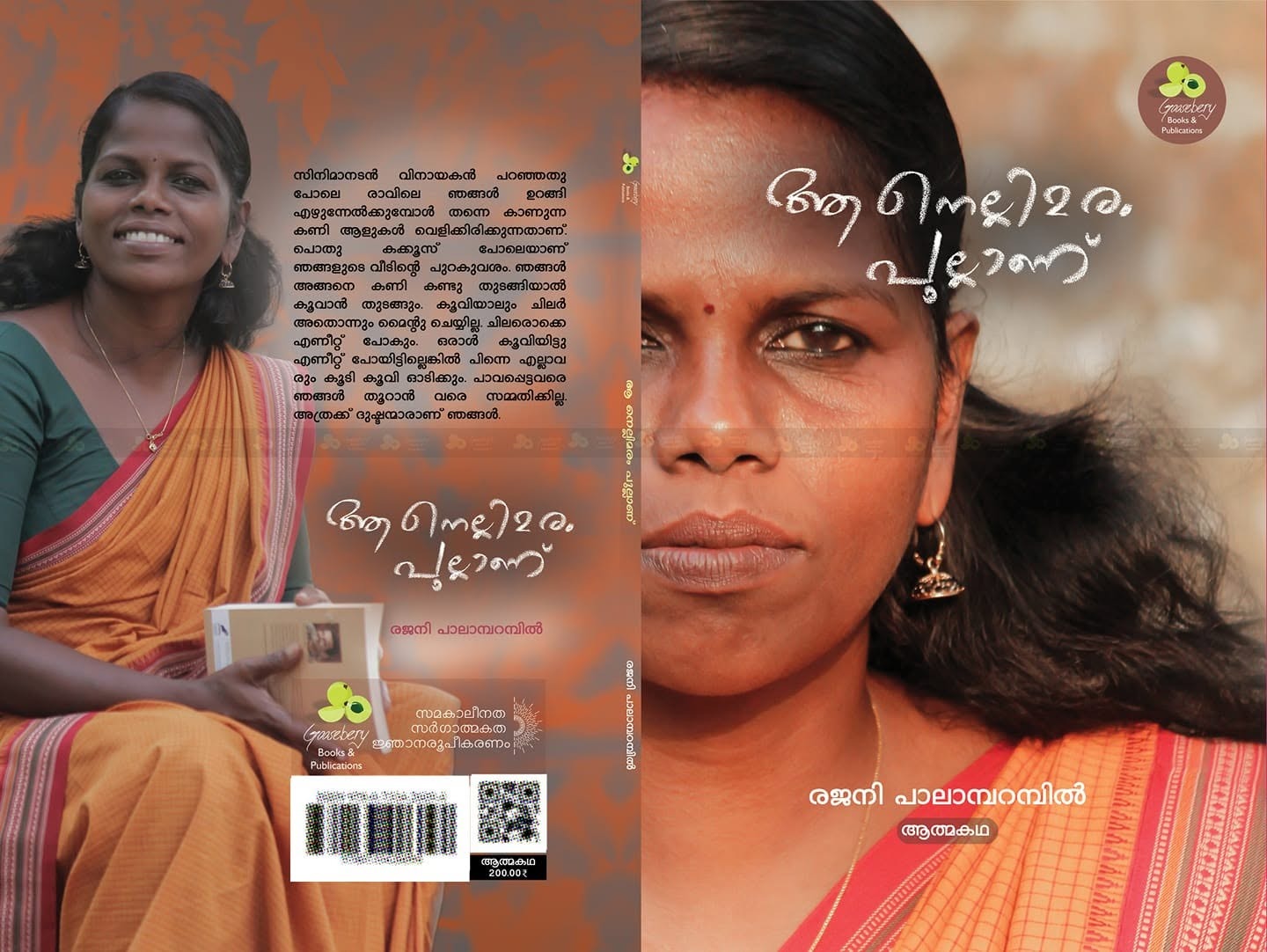
Ultimately, Rajani Palamparambil’s autobiography asks a question far larger than the story of a single life. It asks who has historically been permitted to become literature, who has been denied the authority to remember, and which institutions continue to determine the literary value of ordinary existence.
The enduring achievement of My Burning Monsoon is not simply that it narrates one Dalit woman’s life with remarkable honesty. Its deeper accomplishment lies in transforming the very conditions under which autobiography is understood. It demonstrates that the significance of a life does not arise from prior public recognition but from the act of narration itself. Once that principle is accepted, autobiography can no longer remain the privilege of the historically celebrated.
That is why My Burning Monsoon deserves to be read not only as one of the most important autobiographies in contemporary Malayalam literature but also as a profound rethinking of autobiography itself. It expands the literary archive, democratizes historical memory, and quietly dismantles the cultural authority that has long decided whose lives are worthy of becoming literature. In doing so, Rajani Palamparambil does more than tell her story. She permanently enlarges the possibilities of who may speak, who may remember, and who may finally enter history through literature.


No Comments yet!